


|
|
|
books
| book details |
Theory of Subjectivity from a Cultural-Historical Standpoint: González Rey’s Legacy
Edited by Daniel Magalhães Goulart, Edited by Albertina Mitjáns MartÃnez, Edited by Megan Adams

|
| on special |
normal price: R 3 564.95
Price: R 3 386.95
|
| book description |
This book examines key ideas related to the Theory of Subjectivity within a cultural-historical approach. It brings together the intellectual contributions made by Professor Fernando González Rey (1949–2019) towards understanding human subjectivity, and emphasizing their unfolding in different fields and contexts. The book addresses the genesis and development of González Rey’s work, articulating this discussion with the author’s biography. González Rey’s main scientific contribution is the Theory of Subjectivity in a cultural-historical perspective, which is inseparable from Qualitative Epistemology and from its constructive-interpretive methodological expression. The book presents and discusses González Rey’s contributions to different contexts and fields, such as psychological research, education, cultural-historical psychology, human development, motivation, human health and psychotherapy. This book brings together examples of how these ideas have been employed and developed in different fields and contexts.
| product details |

Normally shipped |
Publisher | Springer Verlag, Singapore
Published date | 16 Jun 2022
Language |
Format | Paperback / softback
Pages | 269
Dimensions | 235 x 155 x 0mm (L x W x H)
Weight | 0g
ISBN | 978-9-8116-1419-4
Readership Age |
BISAC | education / educational psychology
| other options |

Normally shipped |
Readership Age |
Normal Price | R 4 534.95
Price | R 4 307.95
| on special |
|
|
|
To view the items in your trolley please sign in.
| sign in |
|
|
|
| specials |
|
|

|
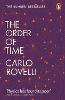
Carlo Rovelli
Paperback / softback
208 pages
was: R 295.95
now: R 265.95
|
|
|
Carlo Rovelli
Paperback / softback
224 pages
was: R 295.95
now: R 265.95
|
Originally published in Italian: L'ordine del tempo (Milan: Adelphi Edizioni, 2017).
|
|
|
|
