


|
|
books
| book details |
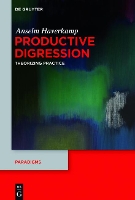
Productive Digression: Theorizing Practice
By (author) Anselm Haverkamp
|
| on special |
normal price: R 6 187.95
Price: R 5 877.95
|
| book description |
Productive Digression is a translation of the ancient term poetics: as a practice of theory. The products produced in the mode of poiesis are ‘digressive’ in that they operate off track; they resist the main stream of every day prose. They do so for various reasons and in various respects. Mostly, they are explained historically, relative to historical contexts and, that is, contrary to what they are meant to resist. Instead, this book investigates the modes of resistance, their epistemology of production, in short, the logic of digression. The method addresses the singular exemplarity of art and literature; it elucidates the impact of poiesis as an epistemological challenge and redefines the analysis of literature and art as branches of an Historical Epistemology. Proceeding from the state of affairs in 20th century criticism and aesthetics (Benjamin, Adorno, Blumenberg, Merleau-Ponty), the epistemology of representation (Whitehead, Canguilhem, Bachelard, Rheinberger) is revised in, and with respect to critical consequences (Derrida, Marin, de Man, Agamben). From literary criticism and critical legal studies to the scenario of the life sciences, the essays collected here redirect the logic of research towards the epistemological grounds of an aesthetics underneath the hermeneutics of every day life.
| product details |

Normally shipped |
Publisher | De Gruyter
Published date | 8 May 2017
Language |
Format | Hardback
Pages | 246
Dimensions | 230 x 155 x 0mm (L x W x H)
Weight | 482g
ISBN | 978-3-1104-8258-4
Readership Age |
BISAC | literary criticism / general
| other options |
|
|
To view the items in your trolley please sign in.
| sign in |
|
|
|
| specials |
|
An epic love story with the pulse of a thriller that asks: what would you risk for a second chance at first love?
|
This is indeed a story of mercy and the redemption it offers.
|
Emil Coetzee, a civil servant in his fifties, is washing blood off his hands when the ceasefire is announced.
|
|
|
|
