


|
|
books
| book details |
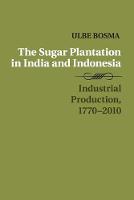
The Sugar Plantation in India and Indonesia: Industrial Production, 1770–2010
By (author) Ulbe Bosma
|
| on special |
normal price: R 1 474.95
Price: R 1 327.95
|
| book description |
European markets almost exclusively relied on Caribbean sugar produced by slave labor until abolitionist campaigns began around 1800. Thereafter, importing Asian sugar and transferring plantation production to Asia became a serious option for the Western world. In this book, Ulbe Bosma details how the British and Dutch introduced the sugar plantation model in Asia and refashioned it over time. Although initial attempts by British planters in India failed, the Dutch colonial administration was far more successful in Java, where it introduced in 1830 a system of forced cultivation that tied local peasant production to industrial manufacturing. A century later, India adopted the Java model in combination with farmers' cooperatives rather than employing coercive measures. Cooperatives did not prevent industrial sugar production from exploiting small farmers and cane cutters, however, and Bosma finds that much of modern sugar production in Asia resembles the abuses of labor by the old plantation systems of the Caribbean.
| product details |

Normally shipped |
Publisher | Cambridge University Press
Published date | 1 Sep 2016
Language |
Format | Paperback / softback
Pages | 336
Dimensions | 228 x 152 x 20mm (L x W x H)
Weight | 510g
ISBN | 978-1-3166-2116-5
Readership Age |
BISAC |
| other options |

Normally shipped |
Readership Age |
Normal Price | R 1 712.95
Price | R 1 541.95
| on special |
|
|
To view the items in your trolley please sign in.
| sign in |
|
|
|
| specials |
|
|

|
Matt Dinniman
Paperback / softback
480 pages
was: R 514.95
now: R 452.95
|
|
|
An epic love story with the pulse of a thriller that asks: what would you risk for a second chance at first love?
|
|
|
|
