


|
|
books
| book details |
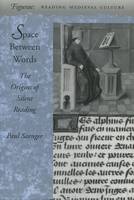
Space Between Words: The Origins of Silent Reading
By (author) Paul Saenger
|
| on special |
normal price: R 1 550.95
Price: R 1 473.95
|
| book description |
Reading, like any human activity, has a history. Modern reading is a silent and solitary activity. Ancient reading was usually oral, either aloud, in groups, or individually, in a muffled voice. The text format in which thought has been presented to readers has undergone many changes in order to reach the form that the modern Western reader now views as immutable and nearly universal. This book explains how a change in writing—the introduction of word separation—led to the development of silent reading during the period from late antiquity to the fifteenth century. Over the course of the nine centuries following Rome's fall, the task of separating the words in continuous written text, which for half a millennium had been a function of the individual reader's mind and voice, became instead a labor of professional readers and scribes. The separation of words (and thus silent reading) originated in manuscripts copied by Irish scribes in the seventh and eighth centuries but spread to the European continent only in the late tenth century when scholars first attempted to master a newly recovered corpus of technical, philosophical, and scientific classical texts. Why was word separation so long in coming? The author finds the answer in ancient reading habits with their oral basis, and in the social context where reading and writing took place. The ancient world had no desire to make reading easier and swifter. For various reasons, what modern readers view as advantages—retrieval of reference information, increased ability to read ""difficult"" texts, greater diffusion of literacy—were not seen as advantages in the ancient world. The notion that a larger portion of the population should be autonomous and self-motivated readers was entirely foreign to the ancient world's elitist mentality. The greater part of this book describes in detail how the new format of word separation, in conjunction with silent reading, spread from the British Isles and took gradual hold in France, Germany, Italy, and Spain. The book concludes with the triumph of silent reading in the scholasticism and devotional practices of the late Middle Ages.
| product details |

Normally shipped |
Publisher | Stanford University Press
Published date | 1 Jan 2000
Language |
Format | Paperback / softback
Pages | 504
Dimensions | 229 x 152 x 0mm (L x W x H)
Weight | 644g
ISBN | 978-0-8047-4016-6
Readership Age |
BISAC |
| other options |
|
|
To view the items in your trolley please sign in.
| sign in |
|
|
|
| specials |
|
An epic love story with the pulse of a thriller that asks: what would you risk for a second chance at first love?
|
This is indeed a story of mercy and the redemption it offers.
|
Emil Coetzee, a civil servant in his fifties, is washing blood off his hands when the ceasefire is announced.
|
|
|
|
