


|
|
|
books
| book details |
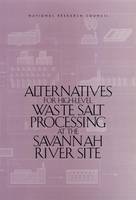
Alternatives for High-Level Waste Salt Processing at the Savannah River Site
By (author) Committee on Cesium Processing Alternatives for High-Level Waste at the Savannah River Site, By (author) Board on Radioactive Waste Management, By (author) Board on Chemical Sciences and Technology, By (author) National Academy of Sciences
|
This title is going to reprint. Please check again soon.
|
| book description |
The Second World War introduced the world to nuclear weapons and their consequences. Behind the scene of these nuclear weapons and an aspect of their consequences is radioactive waste. Radioactive waste has varying degrees of harmfulness and poses a problem when it comes to storage and disposal. Radioactive waste is usually kept below ground in varying containers, which depend on how radioactive the waste it. High-level radioactive waste (HLW) can be stored in underground carbon-steel tanks. However, radioactive waste must also be further immobilized to ensure our safety. There are several sites in the United States where high-level radioactive waste (HLW) are stored; including the Savannah River Site (SRS), established in 1950 to produce plutonium and tritium isotopes for defense purposes. In order to further immobilize the radioactive waste at this site an in-tank precipitation (ITP) process is utilized. Through this method, the sludge portion of the tank wastes is being removed and immobilized in borosilicate glass for eventual disposal in a geological repository. As a result, a highly alkaline salt, present in both liquid and solid forms, is produced. The salt contains cesium, strontium, actinides such as plutonium and neptunium, and other radionuclides. But is this the best method? The National Research Council (NRC) has empanelled a committee, at the request of the U.S. Department of Energy (DOE), to provide an independent technical review of alternatives to the discontinued in-tank precipitation (ITP) process for treating the HLW stored in tanks at the SRS. Alternatives for High-Level Waste Salt Processing at the Savannah RIver Site summarizes the finding of the committee which sought to answer 4 questions including: ""Was an appropriately comprehensive set of cesium partitioning alternatives identified and are there other alternatives that should be explored?"" and ""Are there significant barriers to the implementation of any of the preferred alternatives, taking into account their state of development and their ability to be integrated into the existing SRS HLW system?""
| product details |
Normally shipped |
Publisher | National Academies Press
Published date | 30 Nov 2000
Language |
Format | Paperback / softback
Pages | 154
Dimensions | 280 x 216 x 0mm (L x W x H)
Weight | 0g
ISBN | 978-0-3090-7194-9
Readership Age |
BISAC | technology / environmental engineering & technology
| other options |
|
|
|
To view the items in your trolley please sign in.
| sign in |
|
|
|
| specials |
|
An epic love story with the pulse of a thriller that asks: what would you risk for a second chance at first love?
|
|

|
Mason Coile
Paperback / softback
224 pages
was: R 542.95
now: R 488.95
|
A terrifying locked-room mystery set in a remote outpost on Mars.
|
|
|
|
|
