


|
|
books
| book details |
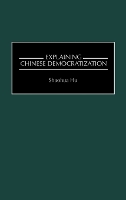
Explaining Chinese Democratization
By (author) Shaohua Hu
|
| on special |
normal price: R 4 366.95
Price: R 3 929.95
|
| book description |
Hu seeks to explain China's failure to establish a democratic system. He demonstrates both continuity and change in China's democratization process. Modern China regards power and wealth as primary goals and treats a strong state as a major means to these ends. Such a preference puts democracy on a back burner. Employing a theoretical framework which consists of five factors—historical legacies, local forces, the world system, socialist values, and economic development—Hu shows that, while all of these factors were at work in all eras, each assumes a special significance in a particular period. Traditional China before the 1911 Revolution attempted to adjust itself to a new, Western-dominated world. In the Republican era, the control of local forces topped the political agenda. Nationalist China sought to survive and develop in the world system, while Maoist China set for itself the task of building a socialist state. And, of course, economic development has been the priority of the Deng era. As Hu shows, these five factors have had determining impacts on the long struggle for democracy in China.
| product details |

Normally shipped |
Publisher | Bloomsbury Publishing Plc
Published date | 30 Jan 2000
Language |
Format | Hardback
Pages | 208
Dimensions | 0 x 0 x 0mm (L x W x H)
Weight | 0g
ISBN | 978-0-2759-6553-2
Readership Age |
BISAC | political science / political process / general
| other options |
|
|
To view the items in your trolley please sign in.
| sign in |
|
|
|
| specials |
|

|
Matt Dinniman
Paperback / softback
480 pages
was: R 523.95
now: R 461.95
|
|
|
An epic love story with the pulse of a thriller that asks: what would you risk for a second chance at first love?
|
|
|
|
|
