


|
|
books
| book details |
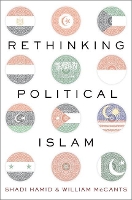
Rethinking Political Islam
Edited by Shadi Hamid, Edited and translated by William McCants
|
| on special |
normal price: R 1 083.95
Price: R 974.95
|
| book description |
For years, scholars hypothesized about what Islamists might do if they ever obtained power. Now, academics and Islamists alike finally have answers. And they are confusing. In the Sunni hinterland between Syria and Iraq, ISIS established a government by brute force, implementing an extreme interpretation of Islamic law. On the opposite end of the spectrum, Tunisia's Ennahda Party governed in coalition with two secular parties, ratified a liberal constitution, and voluntarily stepped down from power. In Egypt, the Muslim Brotherhood lasted in power for a year, alienating most of the country's major political forces before being overthrown in a military coup. The twin shocks of the Egyptian coup and the rise of ISIS have challenged conventional wisdom on political Islam, forcing a rethinking of some of the basic assumptions of, and about, Islamist movements. However, while ISIS and other jihadist groups garner the most media attention, the vast majority of Islamists are of the mainstream variety, seeking gradual change and participating in parliamentary politics (when they're allowed to). In Rethinking Political Islam, two of the leading scholars on the topic, Shadi Hamid and William McCants, have gathered a group of leading specialists in the field to consider the phenomenon, and focus in particular on mainstream political Islamist groups. As Hamid and McCants argue, they not only represent the future of political Islam, but they also provide a fascinating window into a rapidly changing Middle East. It will be the first book to systematically assess the evolution of mainstream Islamist groups across 12 country cases-Egypt, Tunisia, Morocco, Syria, Yemen, Libya, Saudi Arabia, Kuwait, Jordan, and Pakistan, Malaysia, and Indonesia. In each of these cases, the contributors consider how Muslim Brotherhood and Brotherhood-inspired Islamist movements are grappling with fundamental questions, including those about: gradual versus revolutionary approaches to change; the use of tactical or situational violence; attitudes toward the nation-state; and how ideology and political variables interact. Unlike most other projects on political Islam, this book includes three of the most important country cases outside the Middle East-Indonesia, Malaysia, and Pakistan-allowing readers to consider a greater diversity of Islamist experiences. Because the book takes seriously the notion that the only way to understand Islamists is by spending time with them, all of the contributors have immersed themselves in the world of political Islam, offering rich accounts of what animates Islamist political behavior. Rethinking Political Islam offers a fine-grained and definitive overview of the changing world of political Islam in the post-Arab Uprising era.
| product details |

Normally shipped |
Publisher | Oxford University Press Inc
Published date | 7 Sep 2017
Language |
Format | Paperback / softback
Pages | 400
Dimensions | 155 x 234 x 25mm (L x W x H)
Weight | 499g
ISBN | 978-0-1906-4920-3
Readership Age |
BISAC | political science / government / comparative
| other options |
|
|
To view the items in your trolley please sign in.
| sign in |
|
|
|
| specials |
|
|
|
An epic love story with the pulse of a thriller that asks: what would you risk for a second chance at first love?
|

|
Mason Coile
Paperback / softback
224 pages
was: R 517.95
now: R 465.95
|
A terrifying locked-room mystery set in a remote outpost on Mars.
|
|
|
|
